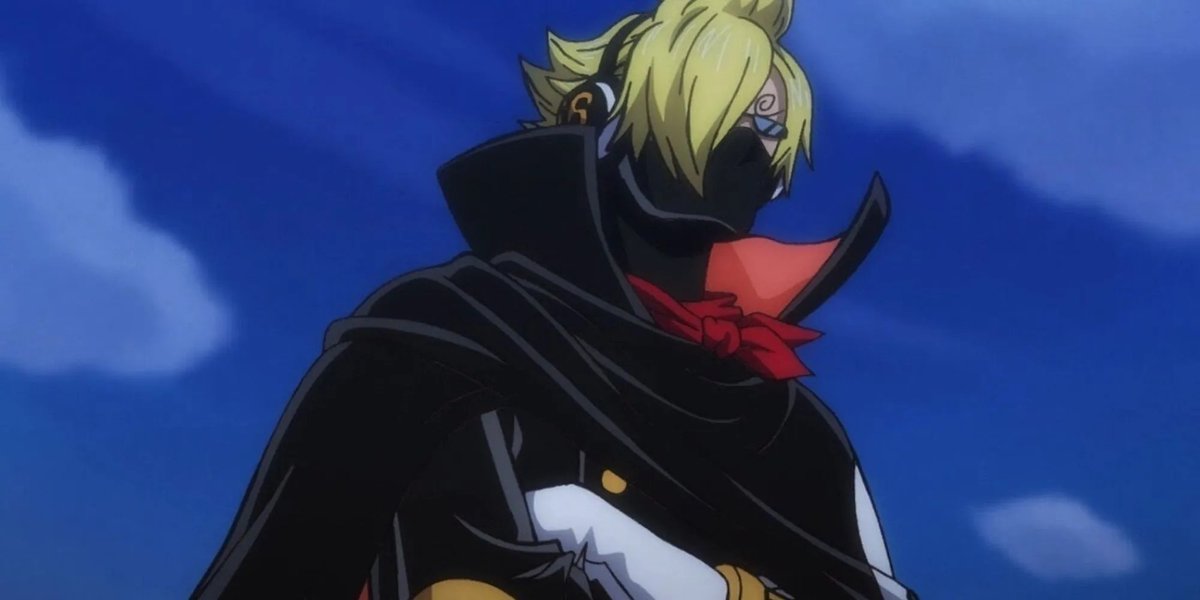
The internet is a vast and wonderful place where fans often dream up incredible crossovers between their favorite series. One such dream often leads readers to search for "Sanji in Gintama," imagining the fiery-legged chef from One Piece crashing into the zany, parody-laden world of Gintama. While the idea sparks endless comedic possibilities, the reality is that a direct, canonical crossover between these two iconic anime and manga series does not exist.
However, the very notion of this query speaks volumes about the unique nature of Gintama itself. Known for its relentless fourth-wall breaks, sharp parodies, and loving—yet often merciless—homages to other popular shonen titles, Gintama has fostered an environment where anything seems possible. This super pillar hub will clarify the non-existence of a Sanji-Gintama crossover while celebrating the distinct characteristics of both series that make such a hypothetical encounter so appealing.
Who is Sanji? The Black Leg Chef of the Straw Hat Pirates
To truly appreciate why a crossover, even a non-existent one, might pique interest, we must first understand the man himself. Sanji, created by Eiichiro Oda, is the highly skilled cook of Monkey D. Luffy's Straw Hat Pirates. Hailing from the North Blue, Sanji's lineage is far from ordinary; he's a prince of the fallen Germa Kingdom, son of the scientist and king, Vinsmoke Judge, and Vinsmoke Sora. His early life was marked by his father's genetic experiments on his five children, which aimed to create super-soldiers. Thanks to his mother's intervention, Sanji was the only sibling to retain his emotions and lack superhuman powers, leading Judge to label him a "failure" and subject him to abuse.
After a crucial escape orchestrated by his sister Reiju, Sanji found his true calling and a new home at the Baratie, a floating restaurant. There, he was mentored by the legendary "Red Foot" Zeff, who not only taught him the art of cooking but also his distinctive "Black Leg Style" fighting technique. This unique style strictly uses kicks, ensuring Sanji's hands remain pristine and solely dedicated to his culinary craft. His ultimate ambition is to discover the All Blue, a mythical sea where all fish from the world's oceans converge. For those eager to dive deeper into the fascinating backstory and motivations of this beloved character, we recommend understanding the rich lore of Sanji, the 'Black Leg' chef of the Straw Hats.
Sanji's character is defined by his calm demeanor, chivalrous nature (famously refusing to attack women, even at great personal cost), and his strong attraction to beautiful women, earning him the nickname "ero-cook." Despite his tough exterior, he possesses an unwavering compassion, never denying a meal to anyone hungry, a principle born from his own harrowing experience of starvation. While fiercely self-reliant, recent arcs have shown his vulnerability, notably seeking Nico Robin's help against a female antagonist after Luffy saved him during the Whole Cake Island Arc, marking a significant moment of growth.
Visually, Sanji is recognizable by his tall, slender build, distinctive swirl-shaped eyebrows (with the tail pointing left, unlike his siblings), and blonde hair that covered his left eye before the timeskip, shifting to cover his right afterward. His real-world nationality inspiration, as revealed by Oda, is French, a stark contrast to the Nazi Germany themes of Germa 66. In combat, Sanji is a high-bounty individual who remarkably hasn't consumed a Devil Fruit. His "Black Leg Style" boasts techniques like "Diable Jambe," where his legs become intensely hot and glow red, and "Sky Walk," which allows him to move through the air. The Raid Suit from Germa 66 awakened dormant genetic modifications, granting him enhanced physical attributes and accelerated healing, which he ultimately accepted after destroying the suit to sever ties with his family. He later developed "Ifrit Jambe," an even more potent, blue-white flame variant of Diable Jambe, alongside his mastery of Observation and Armament Haki. Sanji's contributions extend far beyond combat, from finding Nico Robin in Water 7 to offering his life for Luffy in Thriller Bark. His refusal of an arranged marriage with Big Mom's daughter, Pudding, to protect his crew underscored his unwavering loyalty. To fully grasp the immense impact of One Piece on the anime and manga landscape, and its rich potential for parody, exploring Sanji's journey is essential.
Gintama's Universe: Parody, Puns, and the Fourth Wall
Now, let's shift to the other side of this hypothetical coin: Gintama. This Japanese anime TV series, based on Hideaki Sorachi's manga, is an absolute masterclass in genre deconstruction and meta-humor. Produced by Sunrise (and later Bandai Namco Pictures), Gintama aired across several main television runs from 2006 to 2018, culminating in a series of films and specials.
The setting of Gintama is an alternate-history late-Edo period Japan, where an alien race called "Amanto" (天人; 'Sky People') has invaded. The shogun's surrender led to a public sword ban and a puppet government, setting the stage for the chaotic adventures of Gintoki Sakata. Gintoki, an eccentric samurai and odd-jobs freelancer, runs the "Yorozuya" (万事屋; 'Store of 10,000 business') with his apprentice Shinpachi Shimura and the super-strong alien Kagura. Their escapades frequently intertwine with the Shinsengumi police force and Gintoki's former revolutionary comrades, like Kotaro Katsura. While the series maintains an overarching plot to stop the immortal Utsuro from destroying Earth, it masterfully balances this with largely episodic comedic arcs, rife with pop culture references and self-aware commentary. For a thorough understanding, you'll want to read about the humor and referential nature of Gintama in a deep dive.
Gintama has garnered both positive and mixed reviews, performing well in Japanese TV rankings and DVD sales. Critics frequently laud its improved humor, characters' habitual "fourth wall" breaks, and its remarkable ability to seamlessly blend laugh-out-loud comedy with poignant drama. Its irreverent nature even led to some controversy, such as an episode that negatively portrayed politician Renhō Murata, resulting in its rerun cancellation. Despite (or perhaps because of) these quirks, Gintama stands as a titan of meta-comedy, making it the perfect lens through which to examine other popular anime. To further appreciate its unique comedic genius, exploring Gintama's renowned take on shonen trope deconstruction and meta-humor is highly recommended.
The Art of Anime Homage: Why "Sanji in Gintama" Isn't What You Think
Given Gintama's well-established reputation, it's easy to see why fans might imagine a direct appearance by Sanji. However, Gintama rarely, if ever, features true, sanctioned crossovers where characters from other series explicitly appear as themselves. Instead, its genius lies in the art of parody and homage. Gintama thrives on referencing popular culture, including other anime and manga, through visual gags, character archetypes, exaggerated tropes, and thinly veiled imitations that are just distinct enough to avoid copyright infringement—but obvious enough for any fan to recognize.
Therefore, while Sanji from One Piece has never canonically appeared in Gintama, it's highly plausible that the series has made (or could make) references to One Piece or characters like Sanji. One Piece is a global phenomenon, and Sanji's distinct features—his swirly eyebrows, his "Black Leg Style" fighting, his unwavering chivalry towards women, his "ero-cook" tendencies, and his exceptional cooking skills—offer rich comedic fodder for Gintama's satirical lens. Imagine a character with mysteriously swirled eyebrows showing up at the Yorozuya's doorstep, only to passionately declare his refusal to harm women while trying to cook a meal for Kagura, perhaps to disastrously comedic effect. This kind of nuanced, referential humor is exactly what makes Gintama so beloved. For a deeper dive into this unique approach, you'll want to start exploring how Gintama tackles crossovers and parodies.
It's not about a direct face-off; it's about the witty nod, the knowing wink, and the affectionate jab. This approach allows Gintama to comment on the broader anime landscape without breaking its own narrative integrity. If you're intrigued by how Gintama masterfully handles these meta-references, we invite you to delve deeper into Gintama's unique parody style and its approach to other beloved anime worlds. It's a testament to Gintama's enduring appeal that fans can readily envision their favorite characters from other series making a cameo, even if it's only in spirit. To truly appreciate the breadth of its comedic targets, consider analyzing Gintama's most notable parodies and references to popular culture.
Imagining the Unofficial Encounter: Sanji's Persona in Gintama's World
Even without an official crossover, the very idea of Sanji's persona intersecting with Gintama's cast is a goldmine for fan theories and hypothetical scenarios. How would Gintoki react to Sanji's unwavering chivalry, perhaps mocking it while secretly admiring his dedication? Would Shinpachi be exasperated by Sanji's "ero-cook" antics, much like he is with Gintoki, while Kagura simply demands more food? Sanji's "Black Leg Style" could provide fantastic visual gags against the Amanto, or even against the Shinsengumi during one of their absurd skirmishes. His exceptional cooking skills would undoubtedly be either a blessing or a curse in the Yorozuya household, perhaps leading to unprecedented culinary delights or, more likely, a comedic disaster orchestrated by Gintoki.
His passion for beautiful women would certainly put him at odds with some of Gintama's fiercer female characters, leading to hilarious, one-sided confrontations where Sanji would simply refuse to fight back, much to their confusion. This clash of personalities and principles is precisely what makes the idea of Sanji in Gintama so captivating. To fully explore these amusing possibilities, you'll want to check out hypothetical matchups and comedic scenarios if Sanji ever genuinely crossed paths with Gintama's eccentric cast.
Beyond the Crossover: Embracing the Spirit of Anime's Interconnectedness
While "Sanji in Gintama" remains a fantastic figment of fan imagination, the query itself highlights a beautiful aspect of anime fandom: the desire to see beloved characters interact across different universes. Gintama's unique blend of satire and homage consistently feeds this desire, even without official crossovers. It celebrates the broader anime world by playfully poking fun at its conventions, tropes, and most iconic characters.
Ultimately, both One Piece and Gintama stand as monumental achievements in the anime and manga landscape, each offering distinct and unforgettable experiences. Whether you're drawn to Sanji's quest for the All Blue and his unwavering loyalty, or Gintoki's cynical yet heroic antics in a world overrun by aliens, there's a rich narrative waiting to be explored. Perhaps the greatest crossover of all is how these stories inspire creativity and conversation within their dedicated fanbases, proving that the spirit of adventure and laughter transcends any single series.